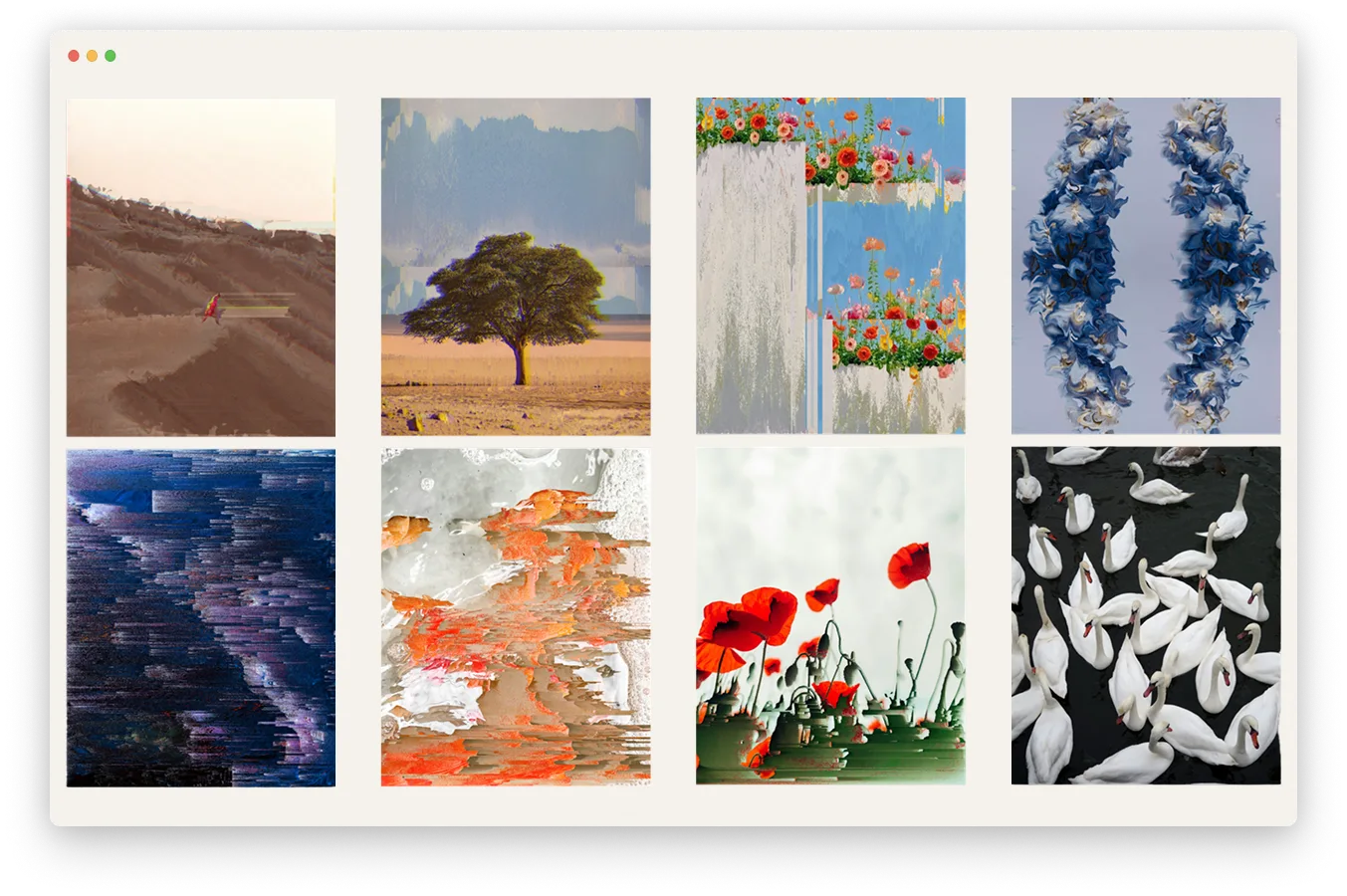
is it mine?
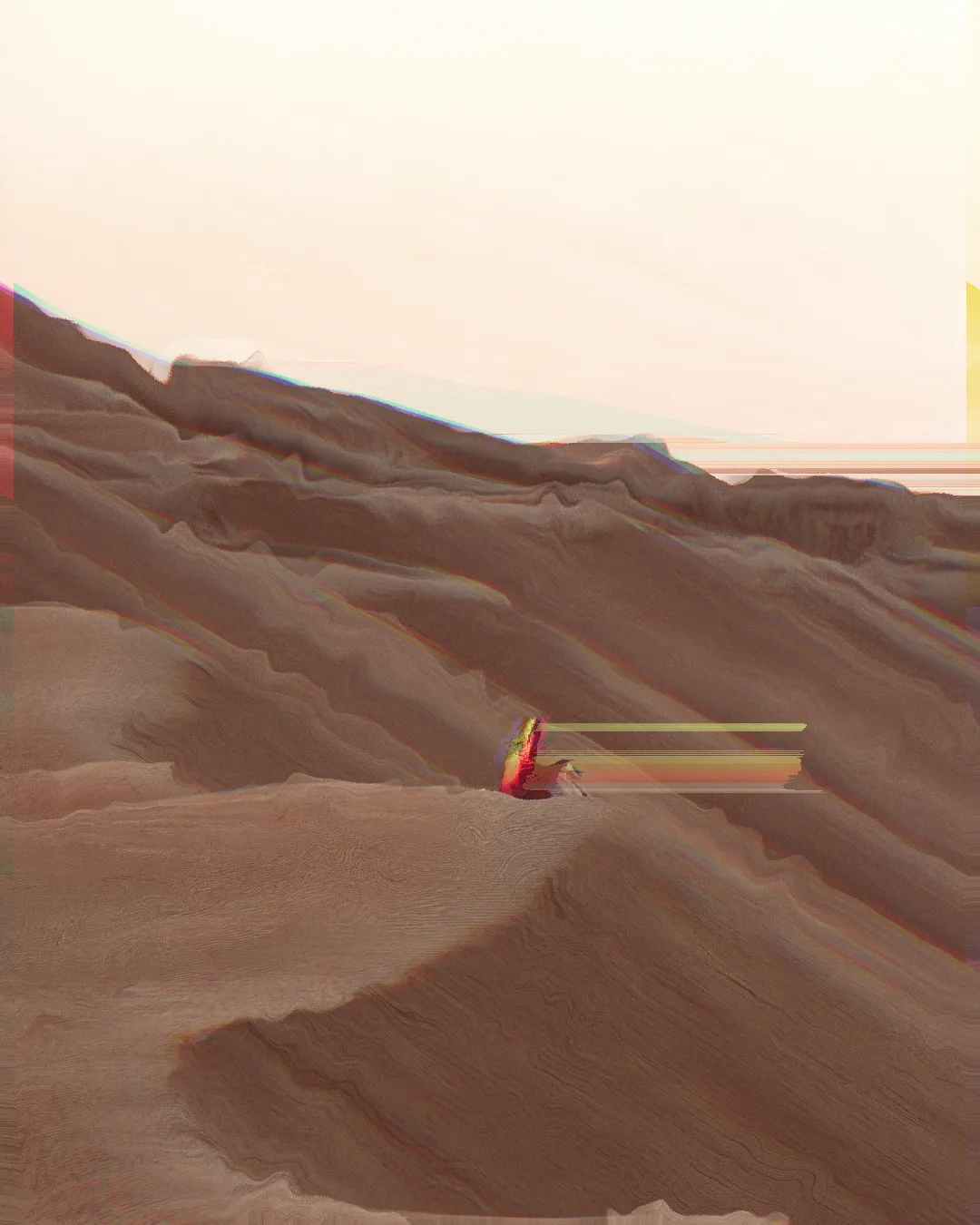
The other week I was scrolling the glitch art tag on Instagram and I kept hitting the same little badge. #noAI. Sometimes tucked in the caption, proud as a ribbon pinned to a jacket. Made without AI. Real art, the badge says, and it draws a line in the sand, and it seems to put me on the wrong side of it.
Here's what made me laugh, though. A tired laugh, but a laugh nevertheless. Glitch art has always been on the wrong side of some line. "That's not real art, the computer made it." "You just ran a script." Anyone who makes work with code has heard it for years. And now I've gone and stacked a second machine on the pile. So my work is double-fake now — computer-assisted and AI-assisted.
But instead of getting defensive, I got curious. Because the badge is so sure, so absolute. But I wasn't so sure. I started thinking: is the art mine? And if AI did help me make it, does the mine-ness depend on how much?
As it happens, I'd just spent four weeks trying to find out.
what the badge is really about
But before I get to what I found, let me be fair to the badge. Because the longer I looked at it, the more I realised #noAI doesn't start as an argument about art. It starts as a fair argument about ethics.
The big image models learned to make pictures by swallowing millions of artworks nobody asked permission for. Whole catalogues scraped off the internet into a training set without credit, consent, or cut of the money. And then the machine built out of that work turns around and competes with the very people it was built from.
But that grievance doesn't touch what I actually did. My machine didn't learn from the internet's art. It learned from me: my own keep-or-reject calls on my own images, operations I wrote by hand, sources I picked or shot myself. Nobody got scraped to build it. No style got laundered. On the ethics, which is the root of the tag, I'm clean.
So you'd think the badge and I have no quarrel. Except the tag doesn't stay on the ethics. Watch it in the wild and it drifts: "trained on stolen work" quietly becomes "any AI touched it at all," and the ribbon stops meaning made without stealing and starts meaning made without machines. That's a different claim. And it's a much older one.
we've been here before
Because that reflex, the machine did it so you didn't, is old.
When photography showed up, painters said the camera did the work and you just pointed it. When synthesizers arrived, "that's not real music, the machine plays itself." Drum machines, samplers, digital painting, generative art. Every single tool that took over some part of the making got met with the same reflex: the machine did it, so you didn't. Glitch art was born on the far side of one of those arguments. We already lost that fight.
So the machine-free version of #noAI, not the ethics but the purity, isn't a new moral frontier. It's the newest verse of a very old song. Which doesn't make the question wrong, it makes it worth asking properly, instead of settling it with a hashtag. And "what even counts as real art" turns out to be a funny question the moment you stop pretending it has an obvious answer.
To ask it properly, though, I had to figure out what I'm actually working with.
what's the material?
One of the threads that stuck with me from my academic studies was material, the idea that a designer has a relationship with their material, and that relationship is where a lot of the craft lives. A woodworker knows their wood. A ceramicist knows their clay.
So what's my material? The obvious answer is the pixels in the image files, the sorted streaks, the corruption in the photos. But that's not really it. Over these weeks the thing I shaped the most, the thing I had a relationship with, was the whole machinery: the scripts, the rules I wrote down, the little LLM taste-judges I built, the single operations done on the images. That's the material. The pixels are just what the machinery produces.
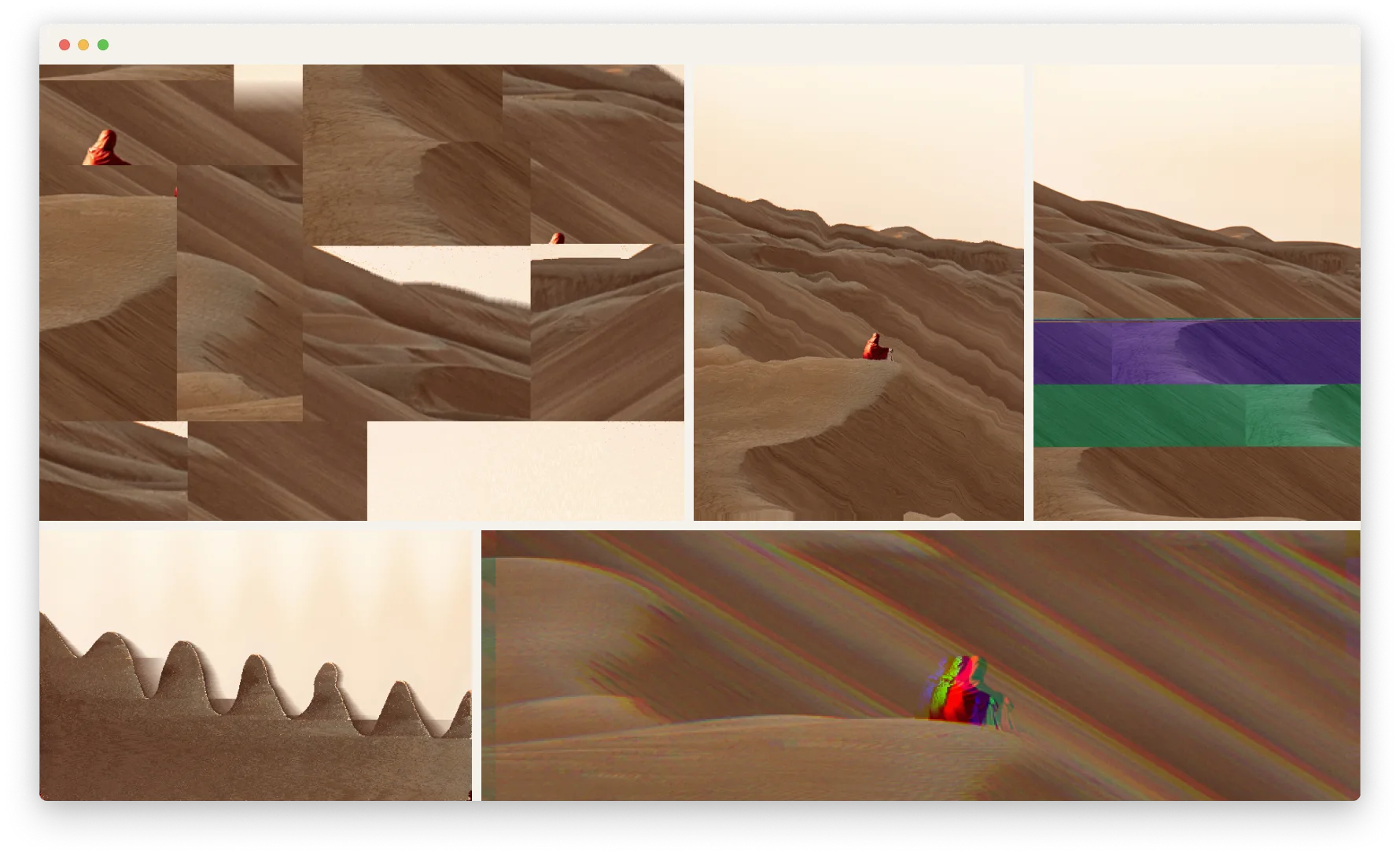
And once you see it that way, the "how much did AI do?" question gets interesting. Because the craft didn't disappear when the machine started running the sort. It moved. I don't hand-execute the effect anymore. I build the press and set the plate, by codifying my own eye into rules precise enough that a machine can apply them. That's still craft.
Which is nice in theory. But I wanted to test whether an AI-assisted piece felt mine, so I built something that could take me out of the loop entirely and see what happened.
the machine with no me in it
The setup was two arms. In the director arm, the machine generates a pile of variations of one source image and I pick. My eye does the final call. In the autonomous arm, the machine does the whole thing end to end: generates, scores, selects, ships. No judgement of mine touches the output directly. Same tools, same process, same taste-rules, but I never lay a finger on the pick.
Then, in Week 4, I ran them head to head. Blind. Same sources, my top three against the machine's top three, sides shuffled so I couldn't tell which was which until after.
I won. I preferred my own picks on 91% of the pairs, on every single source. So the story writes itself, right? The artist's eye beats the machine. Selection is where I'm irreplaceable. Case closed, tell the #noAI crowd they're right.
Except that's not the interesting part. The interesting part is how the machine lost. It didn't run out of good images, it had plenty. It lost at the moment of choosing, because its math averaged a judge that couldn't even agree with itself with one that could, and thus buried its own best work. It failed at the pick, not at the making. Which is exactly the thing I had bet stays human.
And then the experiment did the thing good experiments do. It proved me wrong.
the prediction i got wrong
Before any of this ran, I wrote my predictions down and committed them to a file with a date on them. One of them was about exactly this question. I predicted that the autonomous pieces, the ones with no me in the selection, would feel adjacent to my work. Like something I stood next to but didn't participate in. Not mine.
Then I actually looked at two of them. The good ones, the two that had beaten my own picks in the blind test.
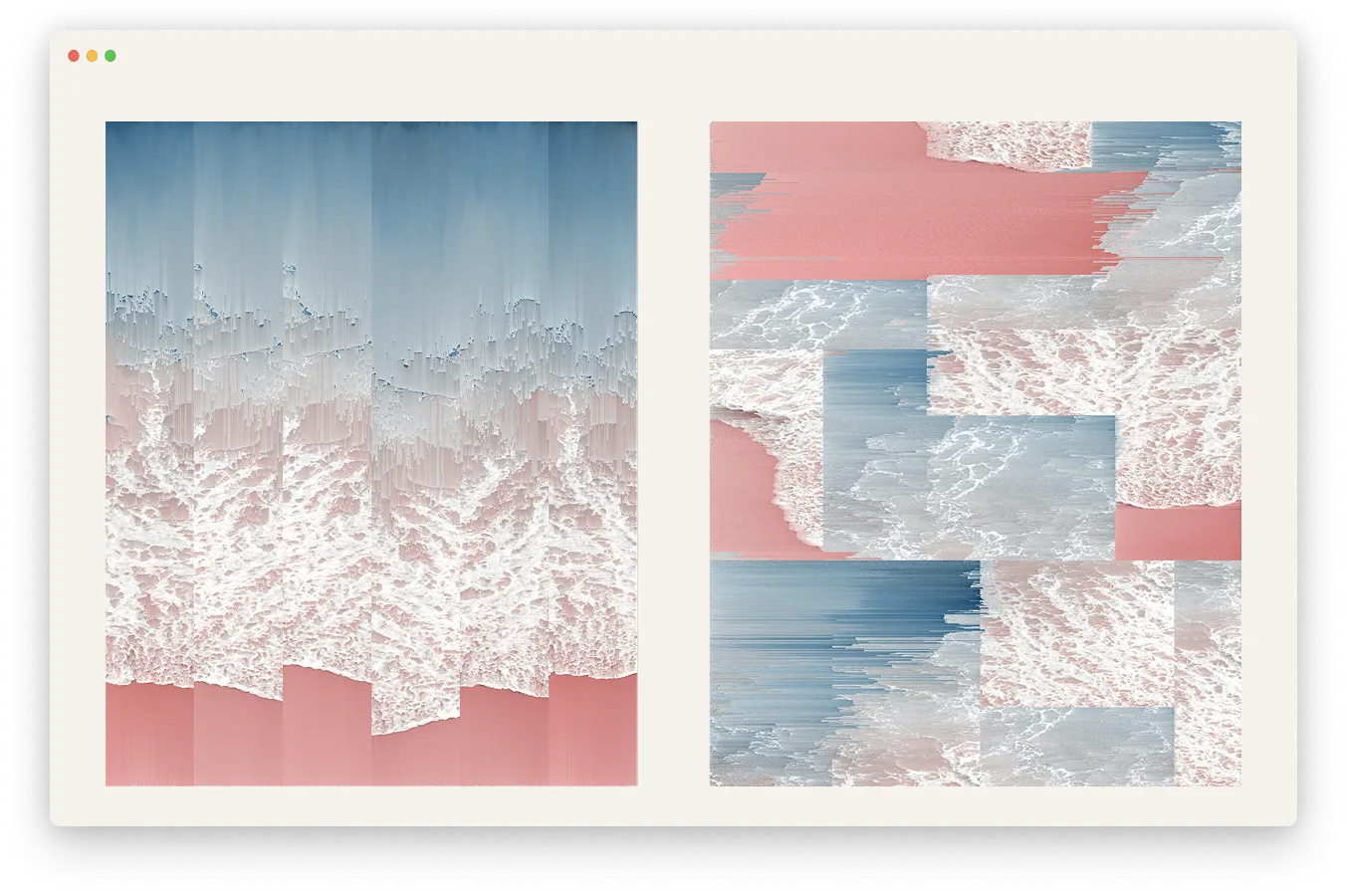
And they felt like mine. Not grudgingly. I looked at them and thought, wait, the autonomous runs made these? I didn't even remember them, and my honest first reaction was that they could easily have been my own director picks. There was no seam. No little voice going that's not you.
So I had it backwards. I thought ownership lived in the final call, that a piece was mine in proportion to how much of my judgement touched it. But here was a piece with none of my judgement in the decision making, and it was mine anyway.
locus, not volume
Here's where I landed, and it's the answer I'd give the badge.
Whether a piece is mine doesn't scale with how much of it I did by hand. It's not a percentage. A piece where AI did most of the work can be completely mine, and a piece can even be selected by a machine and still be mine, because it came out of my material and my taste. The apparatus is soaked in my eye. Its outputs come out looking like me, the way a well-set press pulls a print that's yours whether or not you were watching the paper go through it.
You can see it in the flip side, too. When the autonomous arm made something bad, I clocked it instantly as not-mine, but not because I hadn't picked it. Because it fell outside my taste. It was the kind of thing I'd never let through. So "not mine" wasn't about the missing pick either. Both directions point the same way: it's mine when it's an expression of the material and the taste I built, and it isn't when it isn't. The act of choosing is about quality, not ownership.
Nobody stands in front of a great photo and says the camera should get the credit. The seeing was the photographer's. The material was theirs too.
so, is it mine?
Here's the honest knot at the end, because I don't want to tie a bow that isn't there.
Even after all this, even believing a good autonomous piece is mine, I would still refuse to hand over the whole process. Not because the output wouldn't be mine. Because doing it is what I enjoy. The process is my best source of ideas; the wrong turns are where the good stuff comes from. Owning the result and wanting to be in the room are two different needs. Watching a machine make my art all day would be a little bit sad even if the art was mine in the end.
So when I see #noAI now, I don't feel caught on the wrong side of the line anymore. On the stealing, the badge has a real point, and it can keep it. My machine never took anyone's work, so that line isn't drawn at me. What's left after that is just the counting. How much machine. And mine-ness was never about the amount. It's about whose eye the thing came through. Mine did. It went through my material, my rules, my taste, four weeks and four months and years of learning what I even like.
Double-fake, they'd say. But I'll take it.