Agent0
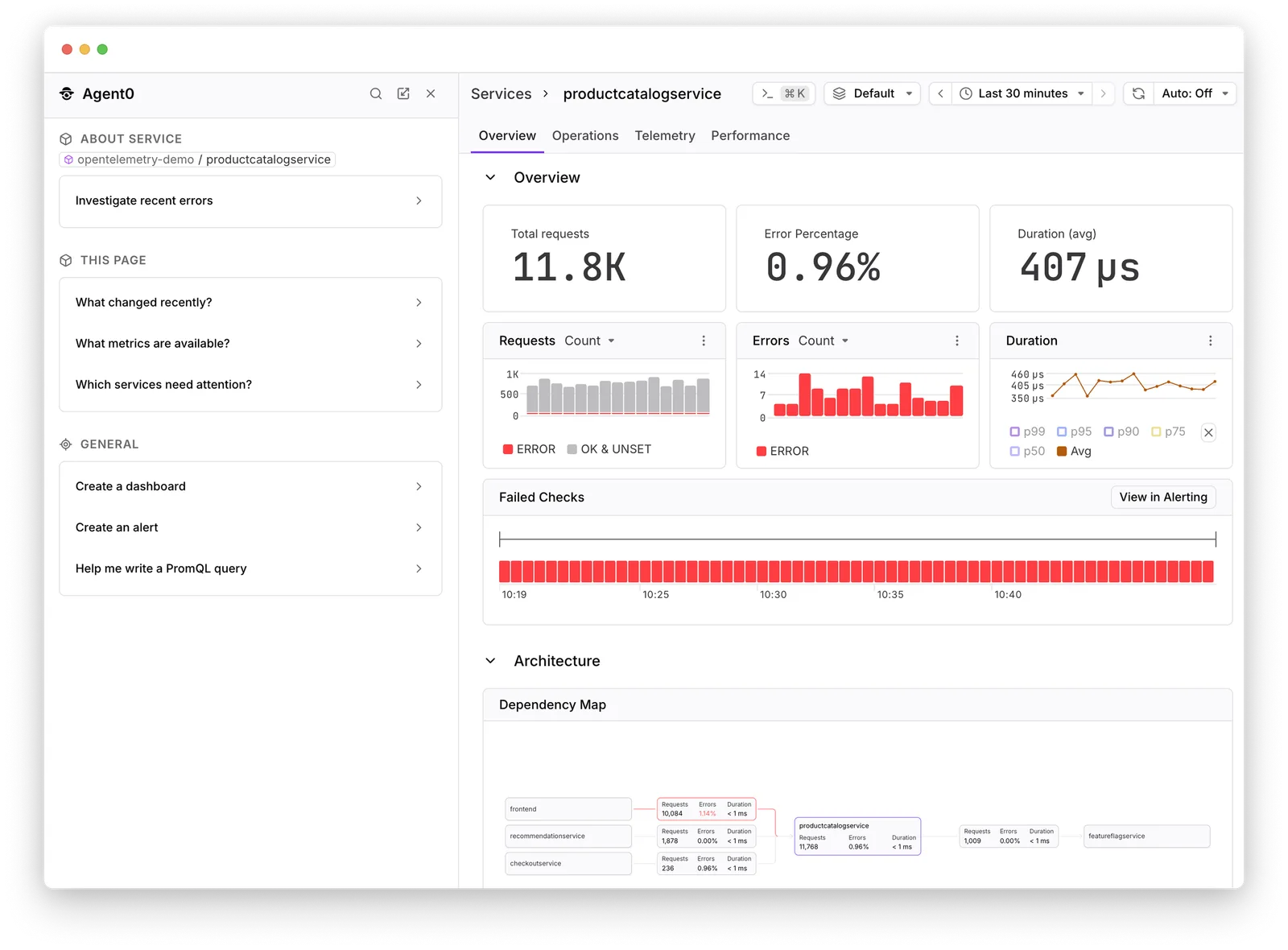
a chat box asks you to arrive with words. during an incident, what you have is a spike on a chart.
the problem
users stared at a blank prompt box. we added suggested prompts, and learned they only land when they're specific to your system — not “create an alert” but “alert when the frontend service's p95 goes above 200ms”. it still didn't fix the deeper thing. a chat interface assumes you'll open with a sentence. in an incident you don't have a sentence. you have a spike on a chart and someone in slack asking what's happening. so the question stopped being how to make the chat better, and became why the user had to start there at all. agent0 is dash0's agent for people running production software. the ambition was never a chatbot — it senses, reasons and acts across your stack.
past the chat box
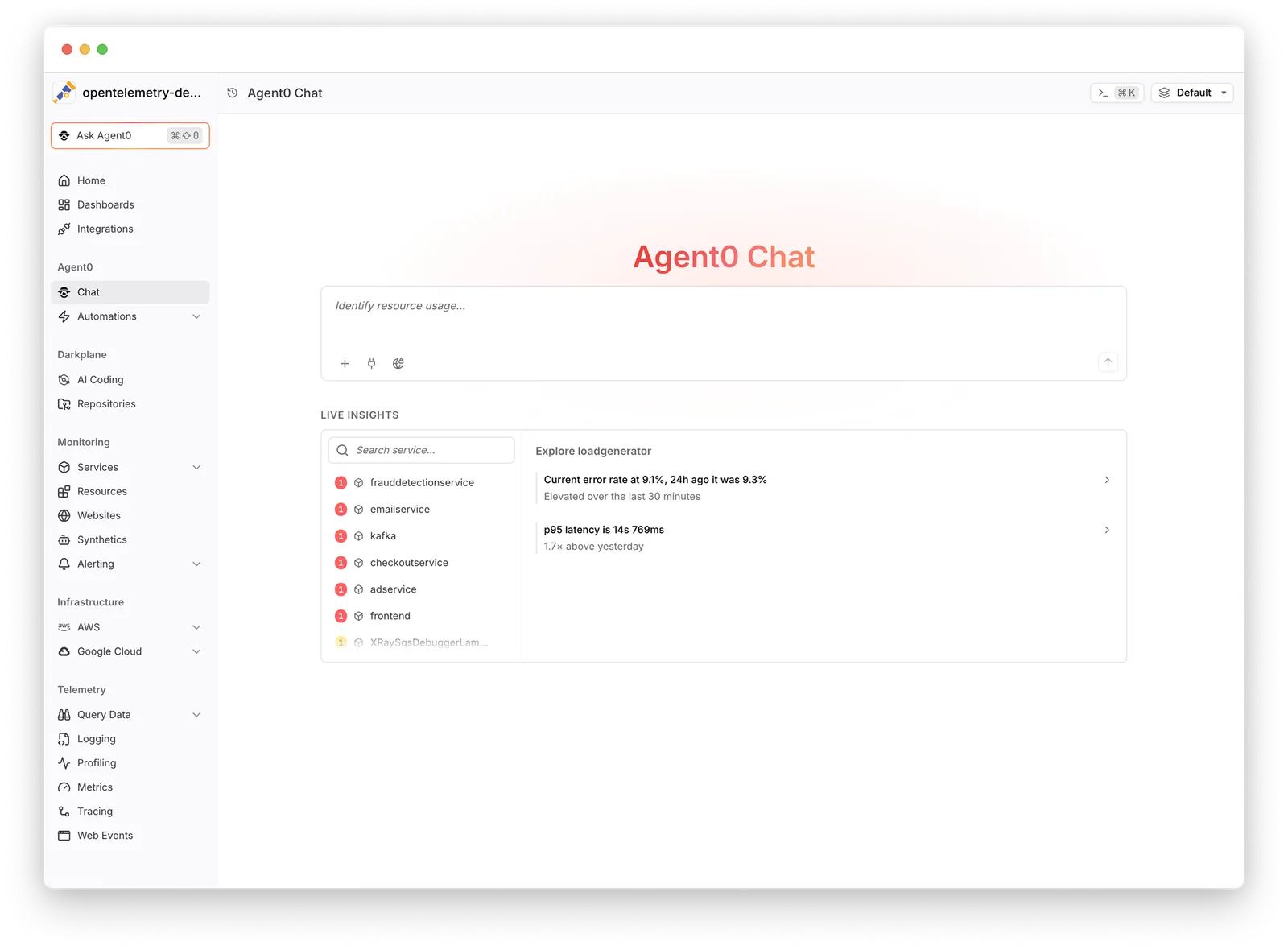
the fix wasn't a better prompt. it was taking the prompt off the critical path. agent0 scans your whole system on its own — we call it live insights — reading across every service and surfacing the anomalies worth your attention before you ask. you don't arrive with a sentence; the findings are already waiting. the hard part is restraint. across 40 services there might be 5 that matter, and flagging all of them is just a christmas tree — alert fatigue in a new coat. so it ranks and brings you what's worth looking at, one thing at a time, not everything it can see. and it doesn't answer in prose. walls of text fail under pressure — people need to scan, not read. a finding comes back as a canvas: description, evidence, the ask — closer to a postmortem doc than a chat thread. not ai in the tool. the tool in the ai.
why the chat still mattered
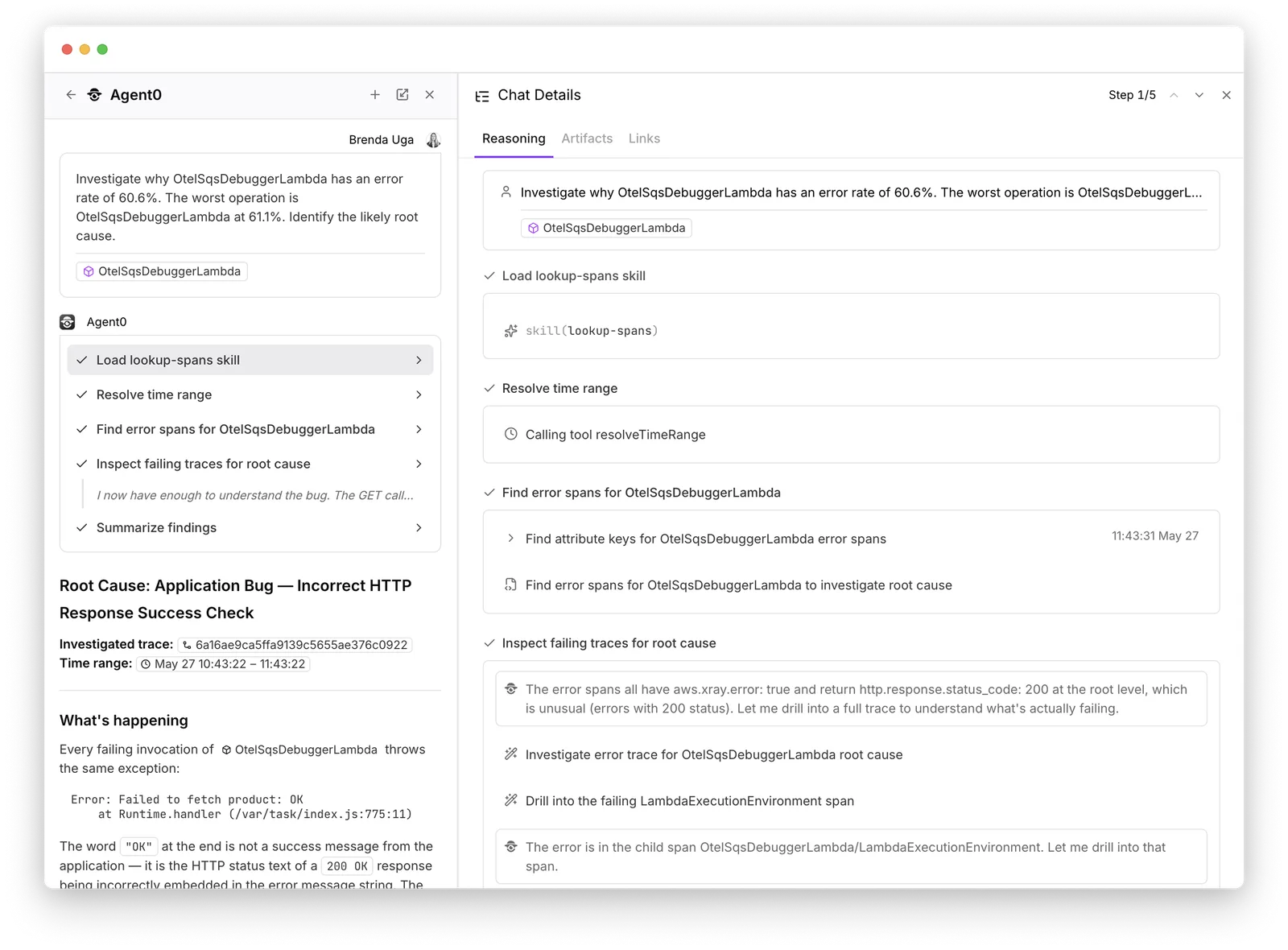
early on, users called it a black box. so the reasoning got its own sidebar: thinking, tool calls, raw outputs, the files and diffs it produced. then the trap — total transparency means nobody reads any of it. progressive disclosure fixed that: auditable when you want it, out of the way when you don't. we'd also shipped six sub-agents with cute names and avatars. we killed them. in a crisis nobody wants to know who the tool is pretending to be — they want to know what it's doing. “network analyzer”, not “threadweaver”. spirit over mascot: the human-like part lives in the behaviour, not the face.
automations, and staying in control
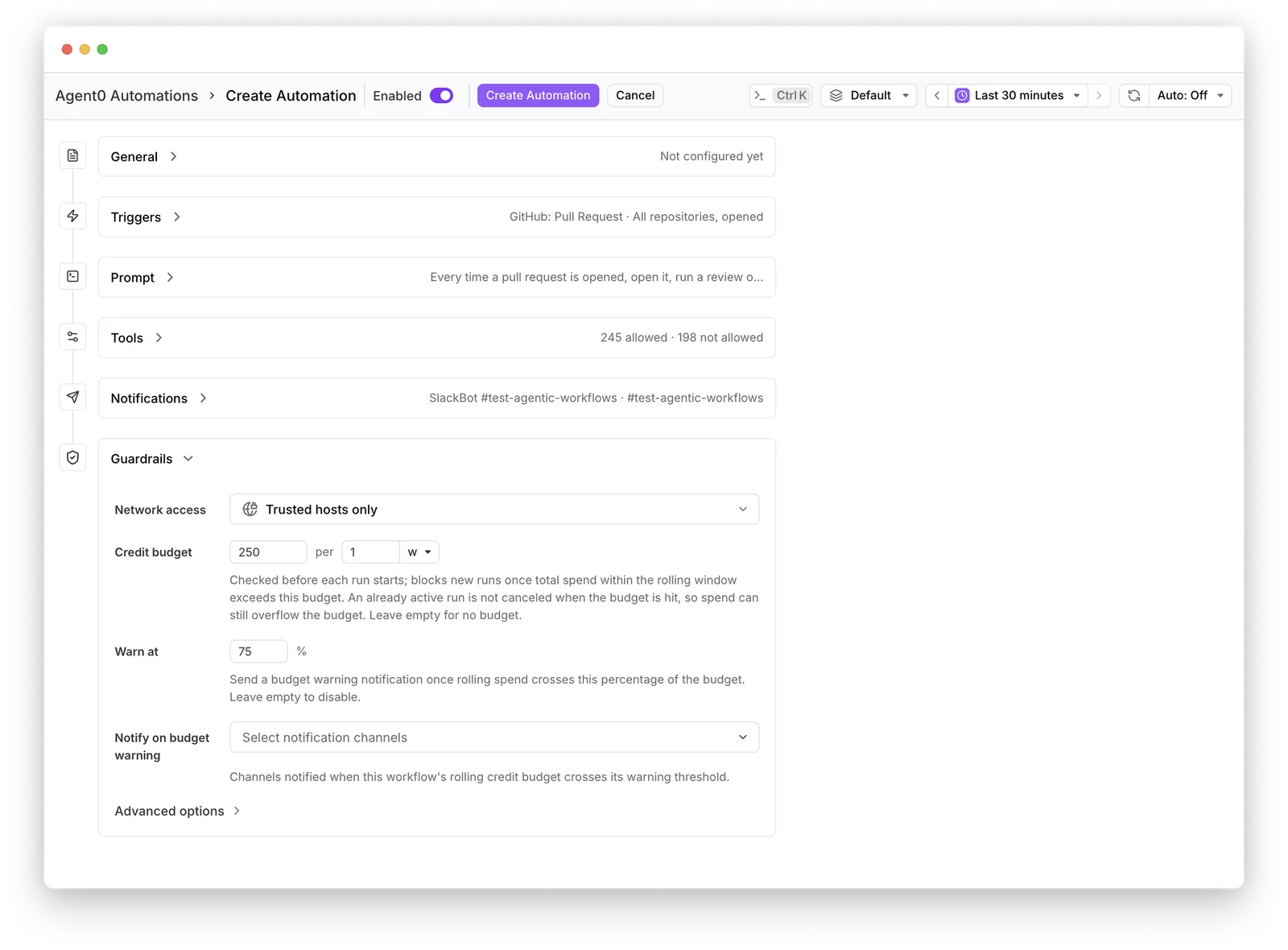
then it stops at surfacing and starts acting. an anomaly it spots posts to your slack channel, opens an investigation, reads your codebase in github, and comes back with a fix already raised as a pr — the follow-up filed in linear. all that's left for you is to review and approve it. that's the real shift: ideally you don't open the ui at all. nobody's watching a dashboard at 3am, but the agent is — the work comes to you and waits for your yes. we were going to ship that without guardrails. the idea survived until we said out loud what it meant — an agent with tools and real reach into production. trust doesn't survive that, and neither does adoption. so capability ships with control. approval gating, so it can't touch an external system without a human checkpoint. tool permissions down to which skills and which parameters — deterministic steps inside a non-deterministic model. and the blast radius shown before you approve, not after. most of that wasn't ui work. it was flowcharts, for surfaces that don't even live in our product.
where it stands
now it's governance: policies, runbooks, escalation plans, memory. dismissing a finding teaches the agent what to stop surfacing, rather than just hiding a card. the agent can hold a conversation. that was never the hard part. the point is that you no longer have to open with a sentence. the longer version — the phases, what we rejected, the framework underneath it — happy to walk you through it.